The U.S. and Iran have agreed on the framework of a deal to stop the war. What happens next?
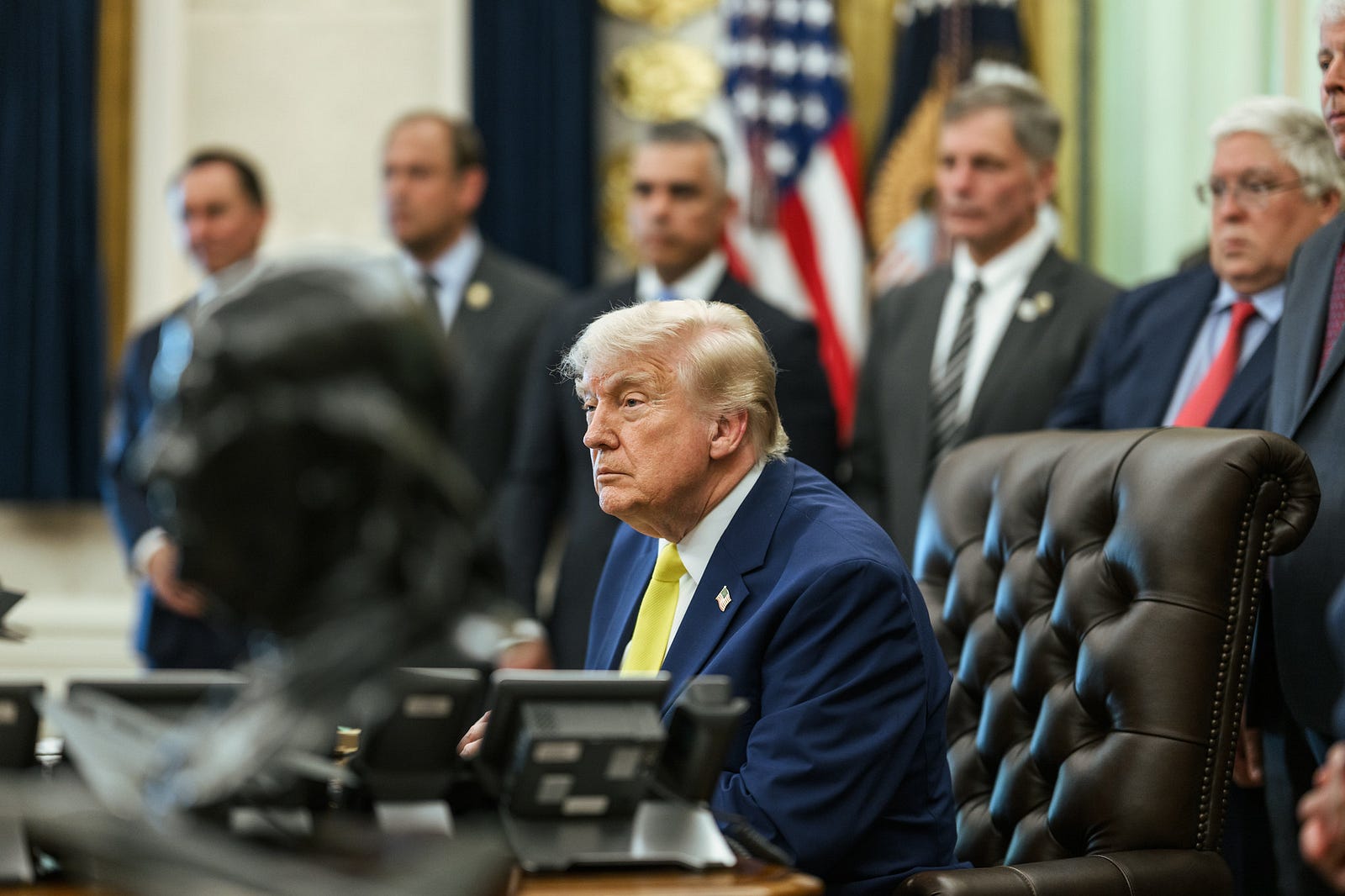
U.S. President Donald Trump celebrated his 80th birthday over the weekend with a legendary bash in Washington, D.C. The event included everything from extreme sports displays, to military flyovers, to a title fight on the National Mall.
President Trump also marked the occasion with news that the U.S. has reached a deal with Iran to end hostilities.
The U.S. and Iran have agreed on a memorandum of understanding to halt military operations, lift the U.S. blockade of Iranian ports, and reopen Hormuz, the narrow but critical waterway through which a major share of the world’s energy supply moves.
The agreement is expected to be formally signed Friday in Switzerland. The text has not yet been released, which means everyone should be careful about declaring victory too quickly. Still, markets have already reacted as if the immediate danger is receding. Oil prices fell on the news. Stocks rallied. The world, after months of watching Iran threaten the global energy system, would very much like the strait open again.
This is classic Trump diplomacy in one sense. He escalates, applies pressure, creates chaos, forces everyone to the table, and then looks for the exit ramp. His critics call it reckless. His supporters call it leverage. In this case, the result is a preliminary deal that Iran, the United States, and regional mediators are all acknowledging in some form.
Now the question is whether the framework survives contact with reality.
The American version of the deal is straightforward: Iran gets a ceasefire and a path to relief, but not a payoff. Vice President JD Vance has been at pains to say there is no money being released up front. Sanctions relief, in the U.S. telling, depends on verified Iranian behavior. That means nuclear concessions, inspections, and an end to Iran’s ability to use the threat of escalation as a permanent bargaining chip.
Iran’s version is very different. Tehran is selling the agreement domestically as a victory for resistance, sovereignty, and regional leverage. Iranian officials are already claiming sanctions relief, frozen assets, and Lebanon as part of the bargain. Iran says Lebanon is integral to the deal. The U.S. is much more cautious. Israel is blunter still.
And there is the first major problem.
Israel is not a party to this agreement. Prime Minister Benjamin Netanyahu has made clear that, deal or no deal, Israel will not allow Iran to obtain a nuclear weapon. Defense Minister Israel Katz has said Israel will remain in security zones in Lebanon, Syria, and Gaza for as long as it believes necessary. Israel’s position is not hard to understand: it is not going to subcontract its security to an agreement between Washington and Tehran, especially when Hezbollah is still armed and Iran is trying to fold Lebanon into the terms.
That does not mean the deal is doomed. It does mean the deal is fragile.
The second major problem is Iran’s nuclear program. The agreement reportedly gives negotiators 60 days to work out the details. That is both the opportunity and the danger. A freeze is useful only if it becomes something enforceable. Iran’s stockpile of highly enriched uranium cannot become an accounting trick. If the final arrangement allows Iran to keep too much, hide too much, or delay too long, the deal will quickly start to look like a pause in the war rather than an end to the threat.
Republican hawks understand this. Some of Trump’s allies are praising the deal as peace through strength. Others are warning that if Iran keeps its nuclear infrastructure, receives sanctions relief, and maintains regional leverage, then the war’s gains could be squandered. They are not wrong to worry. Deals with Iran have a way of becoming arguments over commas, definitions, side letters, inspection rights, and timelines. The regime has spent decades mastering the art of delay.
Still, there is an important difference between this deal and the Obama-era approach Trump hated so much. Trump is not presenting this as trust-building. He is presenting it as conditional relief after military pressure. The message from the administration is not “Iran has changed.” It is “Iran has been forced to the table.” That distinction is politically important, and it may be practically important too.
The next few days will tell us a lot.
First, does the deal actually get signed Friday? Second, does Hormuz reopen in a meaningful way? Third, does Iran stop military activity across the fronts it claims are covered? Fourth, does Israel accept a quieter battlefield in Lebanon, even if it refuses to withdraw? Fifth, does the Trump administration release a text detailed enough to reassure both Congress and America’s allies?
The best-case scenario is easy to see. The shooting stops. Hormuz reopens. Energy prices ease. Iran’s nuclear program is frozen and then rolled back under verification. Trump gets to say he used force, protected American interests, defended Israel from a nuclear Iran, and then ended the war instead of letting it become another open-ended Middle Eastern disaster.
That would be a major achievement.
The worst-case scenario is also easy to see. Iran pockets the ceasefire, drags out nuclear talks, claims sanctions relief, keeps Hezbollah alive as a pressure point, and uses ambiguity over Lebanon to restart the crisis when convenient. In that case, Trump would not have ended the war. He would have rented a pause from Tehran at a high price.
The agreement is a door, not a destination. It gives the U.S. a chance to move from battlefield pressure to negotiated results. It gives Iran a chance to step back from a conflict it was not winning. It gives the region a chance to breathe.
But the deal’s success will depend on what happens after the headlines fade. Iran must be judged by conduct, not ceremony. Israel’s security concerns cannot be wished away. Congress will need to see the terms. And the American people, who have paid for this war in dollars, danger, and higher prices, deserve to know whether this is a real end or just another Middle Eastern pause button.
Trump may have gotten the framework. Now he has to prove it holds.
(Contributing writer, Brooke Bell)